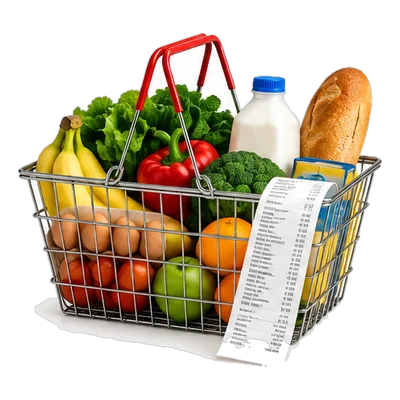
Nine million people have now watched my French husband walk into American grocery stores like a war correspondent. The question we get most, from both countries, is the same: what is actually so shocking? Here is the honest field report.
Your vote
The weekly mega-shop?
One tap. No email needed.
The scale.
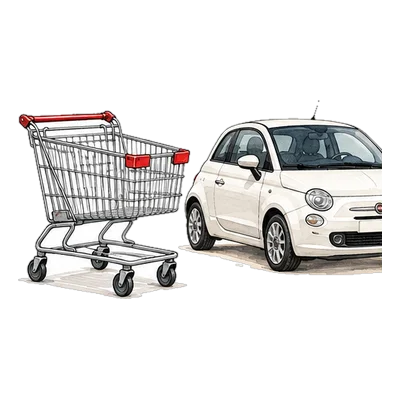
A French supermarket is a store. An American supermarket is a district. The carts are the size of small European cars, and this turns out to be the load-bearing fact of the whole culture: you buy for the week — the freezer week, the pantry week — where France shops for the next two days, because the bread won't survive longer and isn't supposed to.
The cold.
Americans refrigerate with a confidence France reserves for wine cellars. Eggs, cold. Bread, sometimes cold, which he considers a hate crime. And an entire refrigerated wall — forty feet, he measured it emotionally — devoted to flavored coffee creamer. The creamer aisle remains his Waterloo; 2.9 million people watched it happen and the comment section is still at war.
The abundance paradox.
Here's his actual, considered take, past the deadpan: American stores have more of everything and fewer of some things. Forty mustards, but one real butter he approves of. A hundred cheeses, ninety of them "the same cheese in different costumes." He isn't wrong that choice and quality are different axes. He is insufferable about it, but he isn't wrong.

The official test
How American Are You?
Ice, coffee, pumpkins and pajama pants. Eight questions, graded by a Frenchman.
Take the quizThe aisle he respects
produce. Genuinely. The size, the variety, the year-round berries — "France cannot do this in February and pretends it wouldn't want to." It's the one aisle where the verdict comes out favorable, which is exactly why we film him there least. Approval is scarce on this account. That's the whole business model.
Questions, answered
How are French and American supermarkets different?
Scale and rhythm: Americans shop weekly with car-sized carts; the French shop every day or two, buying bread that isn't meant to survive 48 hours.
Why don't the French refrigerate eggs?
European eggs aren't washed, so the natural protective coating stays on and they're shelf-stable. American eggs are washed for safety, which removes it — so they must be refrigerated. Both systems are safe; they're just different.
What surprises French people most in American stores?
The refrigerated coffee-creamer aisle, portion sizes, and shopping by car. What impresses them most: the produce section — its size and year-round variety.
Still wondering?
Ask my French husband.
A short ruling in a few seconds. Written by AI from our Journal, in his voice.
For his verdicts delivered with unreasonable seriousness, we're on Instagram — and Le Bulletin gets field notes like this one.

Before you go
Your First Day in New York
This was his first day in America. Now it is yours.