Your vote
Ice in your water?
One tap. No email needed.
Do the French really hate ice?
Hate is strong. The French position is that ice is an ingredient you did not order, added in quantity, which then replaces the thing you did order. Put like that, it is difficult to argue with, and I have tried.
What do you actually get when you order a cold drink in France?
A soda arrives as a small glass bottle, already chilled, with a glass beside it and sometimes a slice of lemon. Often there is no ice at all. If there is, it is two or three cubes. The bottle is the portion: there are no free refills, so the drink in front of you is the drink you get.
Water comes two ways. Bottled, still or sparkling, which is cold because it was in the fridge. Or a carafe from the tap, which is free and comes at whatever temperature the tap was.
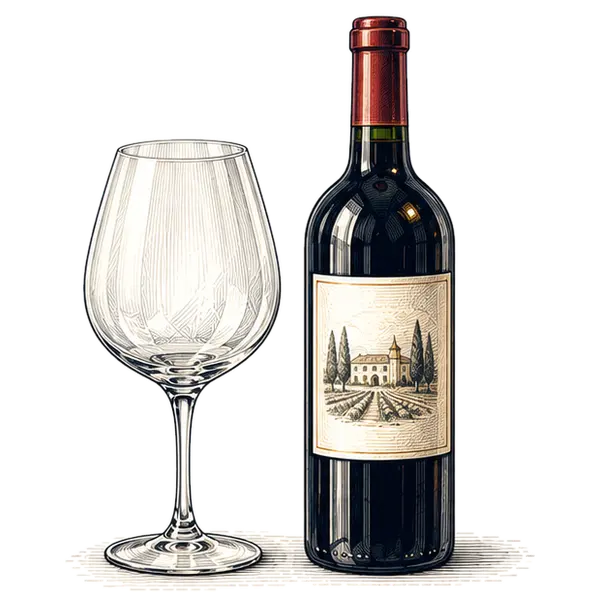
Wine follows the same logic. Red is served at cellar temperature, not room temperature, and white and rosé are chilled in the bottle. The cold is applied to the container, not put into the glass.
Ice in France vs America, side by side
| United States | France | |
|---|---|---|
| Glass of soda | Filled with ice, then poured | Chilled bottle, glass on the side, ice optional |
| Ice, if any | Half the glass | One to three cubes |
| Refills | Often free | Rare. The bottle is the portion |
| Water at the table | Iced, poured without asking | A free carafe of tap water with a meal, not iced |
| Cold water | From the tap, with ice | Usually a bottle from the fridge |
| Red wine | Room temperature | Cellar temperature, cooler than the room |
| Ice at home | About half of homes have an ice maker | An ice tray in the freezer, for the apéritif |
| How to ask | “No ice, please” | “Avec des glaçons, s’il vous plaît” |
Why do Americans use so much of it?
Because cold is part of the expected sensation, and because refills make dilution irrelevant — if the glass is topped up for free, the ice melting is not a loss. The two habits are internally consistent; they just do not survive contact with each other.
Where did the American habit come from?
Partly from here. In 1806 a Boston merchant named Frederic Tudor sent a trial cargo of New England ice to Martinique. There was nowhere to store it and most of it melted. He kept going, cutting ice from ponds such as Fresh Pond in Cambridge in winter and shipping it south and overseas, and became known as the Ice King. By the mid-1820s Boston was shipping about 3,000 tons of ice a year, two-thirds of it his.
It grew into a national industry. At its height, in the 1880s and 1890s, the American ice trade employed about 90,000 people. By 1914 factories made more ice than was cut from lakes, and by the 1930s the home refrigerator was common in American kitchens. Americans already expected ice in the glass by then. The freezer with a built-in ice maker finished the job: in a 2015 survey by Lawrence Berkeley National Laboratory, about half of American households used at least one ice-making appliance.
France had no such campaign and no such expectation. A café kept drinks cool in a cellar, then in a fridge, and nobody thought the glass was missing anything.
The official test
How American Are You?
Ice, coffee, pumpkins and pajama pants. Eight questions, graded by a Frenchman.
Take the quizIs this the same as the water thing?
Related. French restaurants bring a carafe of tap water without being asked, and nobody expects it to be cold. If you want cold water in France you are generally buying a bottle, which is a separate conversation — and the bottles have their own hierarchy.
The free carafe is not a courtesy. A decree from 8 June 1967 lists “ordinary water” as part of the place setting in a restaurant, alongside the bread, so it cannot be charged for during a meal. Since 1 January 2022 a newer rule has gone further: restaurants and bars must show that customers who order something can ask for free drinking water. Nothing in either text says it has to be cold.
When do the French use ice?
More often than the reputation suggests. Cocktails get ice. So does pastis, which is served with ice and a small jug of cold water to dilute it yourself. In the south, in summer, people put ice cubes in rosé and call it a piscine, a swimming pool. Purists object. Everybody does it anyway.
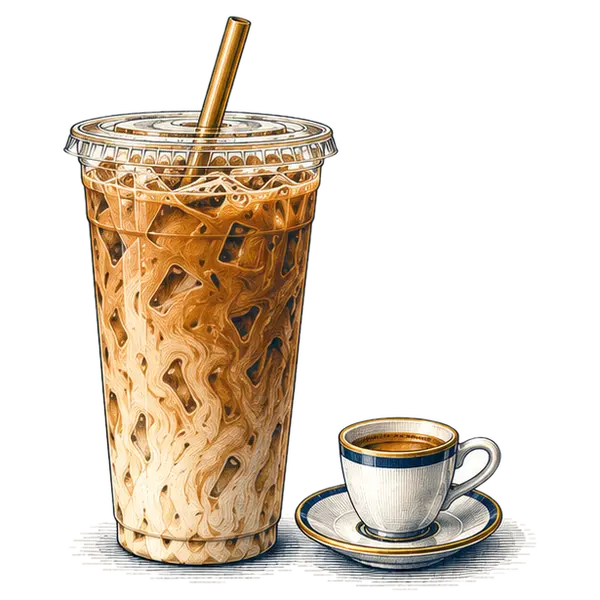
What stays rare is ice as the default: a tall glass filled to the top before the drink goes in. That remains a visibly American thing to want, in the same way that an iced coffee the size of a vase does.
How do you ask for ice in France?
Say “avec des glaçons, s’il vous plaît”: with ice cubes, please. For a lot of ice, “beaucoup de glaçons”, and expect a glance. To refuse it, “sans glaçons”.
Do not ask for glace on its own. It means ice in general, but in a café it mostly means ice cream, and you may be handed the dessert menu.
You will also be told, sooner or later, that very cold drinks are bad for the stomach. It is a widely held belief rather than a medical finding, and it is offered kindly.
Questions, answered
Why don’t the French use ice in drinks?
Because ice is thought to dilute the drink and dull its flavour. French drinks are served cool rather than cold, and if ice appears it is usually one or two cubes rather than a full glass.
Do French restaurants serve tap water?
Yes. A carafe of tap water is brought free on request and is entirely normal, though it will not usually be iced.
Can you ask for ice in France?
Yes — ask for glaçons. You will generally get a few cubes rather than a filled glass, and nobody will be offended, though someone may comment.
How do you ask for ice in French?
Say “avec des glaçons, s’il vous plaît”, which means with ice cubes, please. Glaçons are ice cubes. Glace on its own usually means ice cream.
Do Europeans put ice in drinks?
Less than Americans do. Across much of continental Europe drinks are served chilled from the fridge with little or no ice, and free refills are uncommon, so ice is not used to fill the glass.
Is tap water free in French restaurants?
Yes. Restaurants in France are required to provide tap water free with a meal. Ask for “une carafe d’eau”. It is not usually served with ice.
Who started putting ice in American drinks?
The habit grew out of the 19th-century ice trade. Frederic Tudor of Boston shipped his first cargo of New England ice in 1806, and by the 1880s the American ice trade employed about 90,000 people. Home refrigerators and ice makers made it permanent.
Do French bars have to give free water?
Since 1 January 2022, restaurants and bars in France must display that customers who order something can ask for free drinking water. In restaurants, water with a meal has been free since a 1967 decree.
Sources
- Arrêté du 8 juin 1967, article 4: bread and “eau ordinaire” are part of the restaurant place setting. L’Hôtellerie Restauration. L’Hôtellerie Restauration
- Free drinking water in bars and restaurants from 1 January 2022, article L.541-15-10 of the Environmental Code (2020 anti-waste law). MoneyVox
- Frederic Tudor’s 1806 Martinique cargo, Boston shipments in the 1820s, 90,000 workers at the trade’s height, plant ice overtaking natural ice by 1914. Ice trade, Wikipedia
- Lawrence Berkeley National Laboratory, “Ice-Making in the U.S.” (2015): 49.2% of households use one or more ice-making appliances. LBNL
Verified October 2026.
Still wondering?
Ask my French husband.
A short ruling in a few seconds. Written by AI from our Journal, in his voice.
He judges America weekly on Instagram, and Le Bulletin collects the best of it.
Before you go
Could You Survive a French Dinner Party?
I failed my first French dinner party. See if you would do better.