This week’s débat is school lunch, and Sacha has opinions. Here are the five differences from the reel, his case and mine, the facts behind each one, and then your vote: do we have lunch to learn, or do we learn to have lunch?
 No. 02
1. What is on the menu
“In France, even in public school, children often are served a starter, a main course and a dessert.”
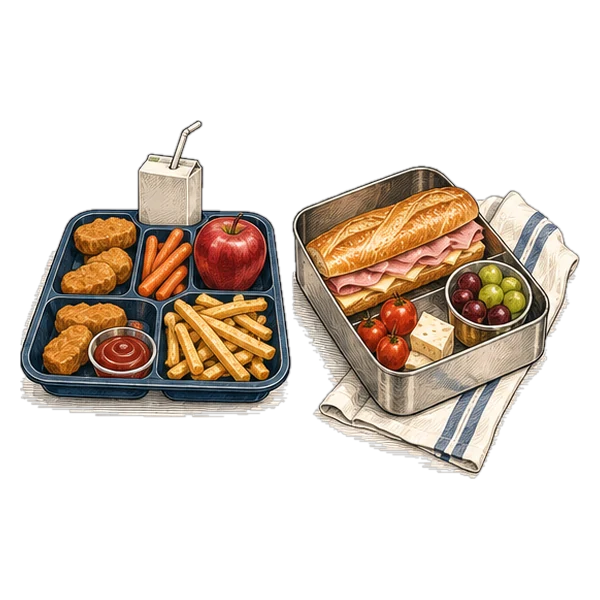
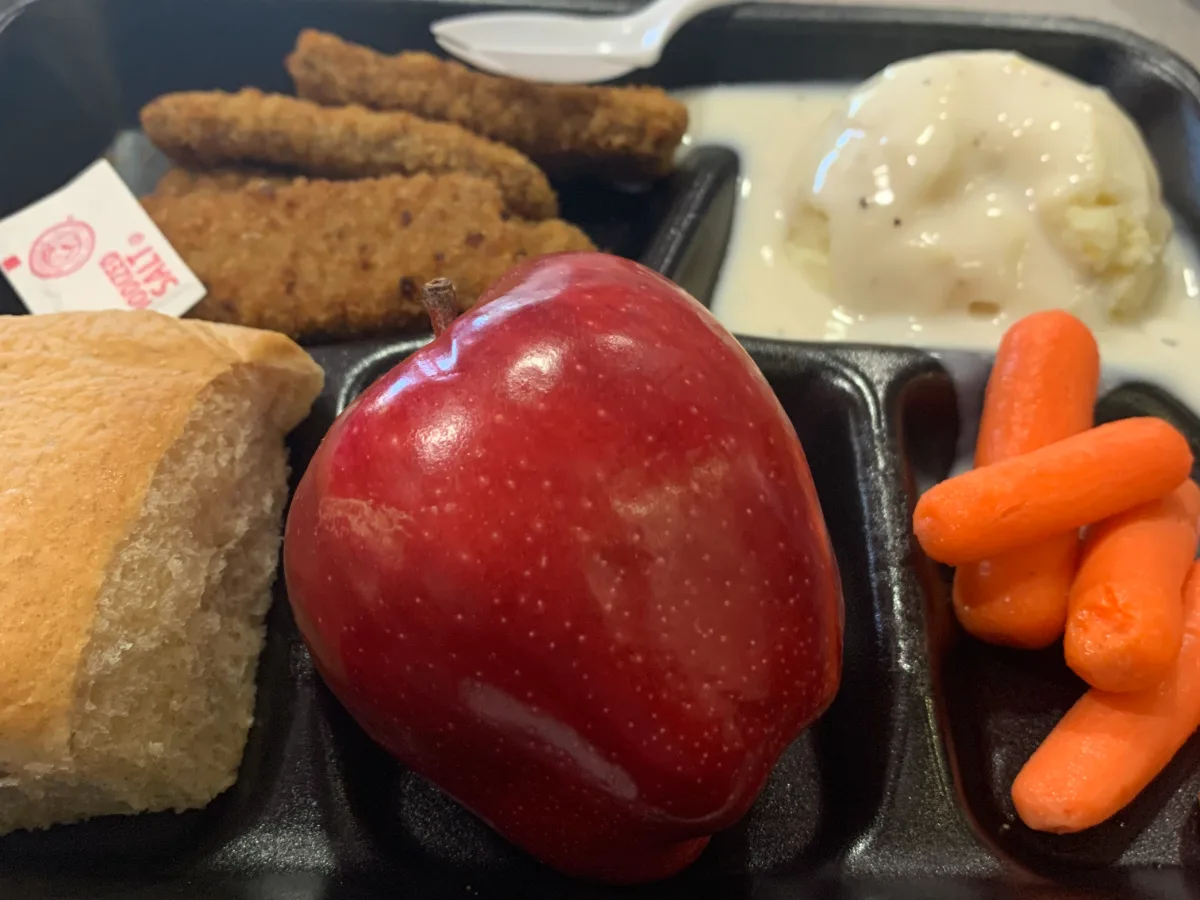
“In the U.S., a typical school lunch is usually frozen, maybe fried, and definitely chocolate milk.”
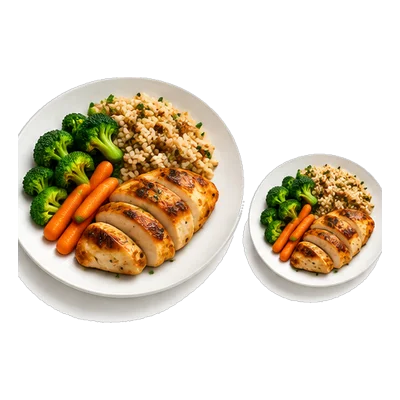
The French version is not a myth. A French school meal is built around five components: a starter, a main dish, a side, a dairy product and a dessert, with bread on the side. Since 2022 the law has also asked canteens for at least 50% quality-labelled ingredients, 20% of them organic, and one vegetarian meal a week. My defense: plenty of American schools cook from scratch, and our tray in the reel is not every school. What French kids actually eat for school lunch.
2. How long children have to eat
“20 minutes? 20 minutes in France is the time you take to go to the cafeteria. Lunch is an hour.”
“You’re going to be terrified, but in the U.S., lunch is around 20 minutes. Lunch can be as early as 10:30 in the morning.”
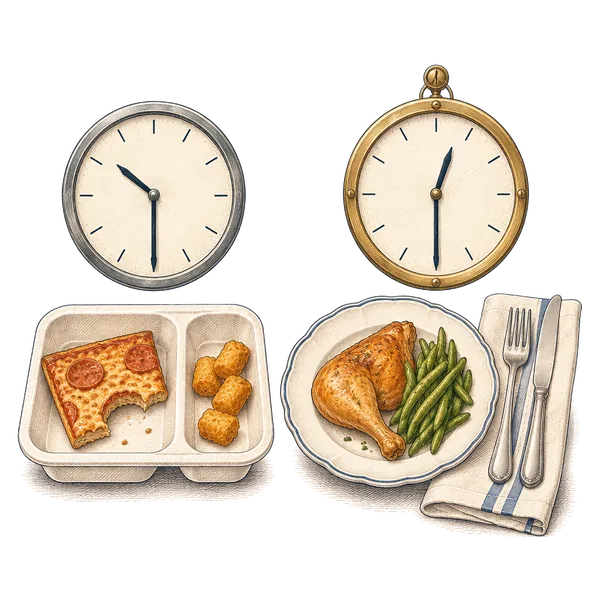
He was, in fact, terrified. The CDC recommends at least 20 minutes of seat time for lunch, which is the time a child actually sits and eats, not the time spent in line. About half of US school districts have no seat-time requirement at all. And 10:30 is not the record: in New York City in 2019, about 1 school in 5 served lunch before 10:30, and 100 schools before 10.
Your vote
Lunch to learn, or learn to have lunch?
One tap. No email needed. Results next Wednesday.
3. Picky eaters
“That is the recipe to make your kid a picky eater. He’s picky because you give him a sandwich with peanut butter. Give him the same thing that you have, small size. If he’s not eating it, he will have it for dinner. And then for breakfast.”
“In the U.S., a lot of parents just pack their lunch, peanut butter and jelly. I give him a sandwich with peanut butter because he’s picky. What do you have against peanut butter? It’s so good.”
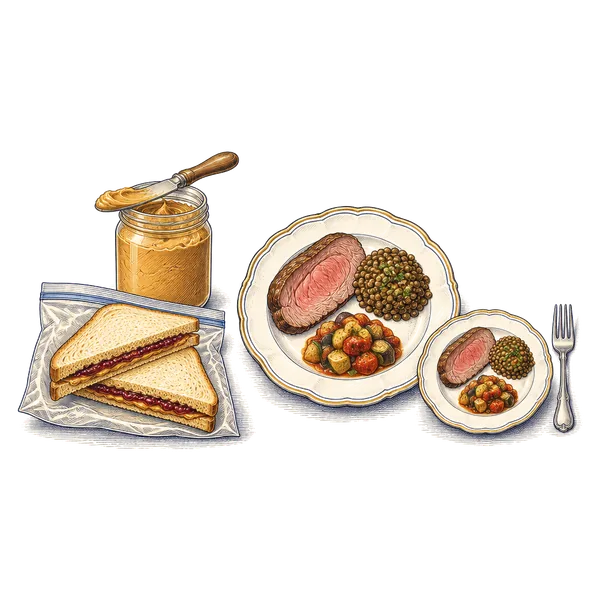
I still think the sandwich is innocent. But it is the same argument as the kids’ menu in Le Débat No. 01. Why French kids eat what adults eat.
4. What children drink
“In France, we stick to water. Just water. It’s too sugary, it’s bad for you.”
“In the U.S., children can often choose between regular milk and chocolate milk, or sometimes soda, or even vending machines.”
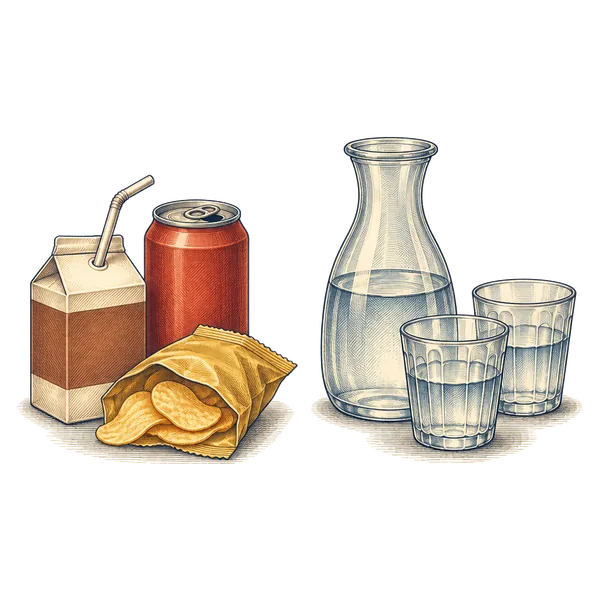
Both are true, with an asterisk. US schools must offer plain milk at every lunch, and chocolate milk is still allowed: since the 2025–26 school year it is capped at 10 grams of added sugar per cup. France went further, earlier: a 2004 law banned paid food and drink vending machines open to pupils in schools, from September 2005.
5. What lunch teaches
“In France, eating is part of your education. How to have a healthy relationship with food. You don’t rush the food, you appreciate the food. I eat because I need the ritual, to sit down and to enjoy, and to learn how to use your napkin and have the silver fork and knife. We don’t have plastic fork and knife.”
“In the U.S., we tend to separate eating from education. I think Americans are so focused on productivity. I eat because I’m hungry.”
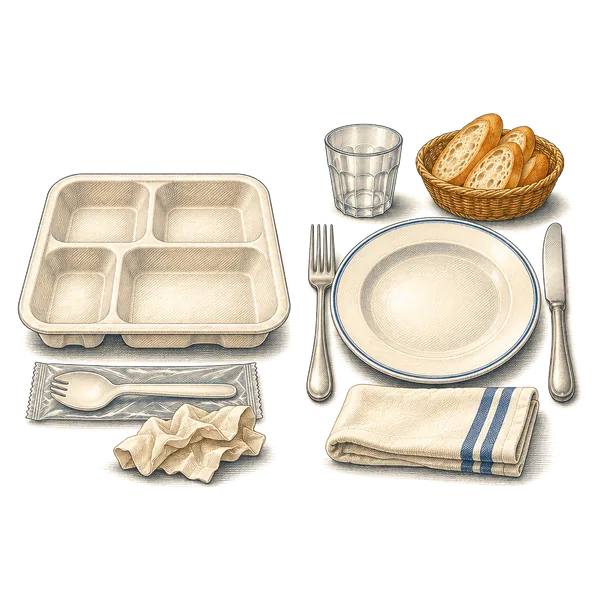
“And productive,” he added. In France the canteen is meant to teach: children sit at tables, taste new things, learn to share a meal and not to waste it. That is official policy, not a French husband’s opinion. The napkin part may be his opinion.
The official test
Do You Parent French or American?
Snacks, bedtime, saying no. Find out which side of the table you sit on.
Take the quizSo who is getting it right?
On paper, the French tray looks better. But the French canteen comes with time, a kitchen and a whole country that agrees lunch matters. An American school with twenty minutes and a line out the door is working with what it has.
His answer, when I asked who is getting it right: “We learn to have lunch the right way.” Tell us yours.
About the photos in the reel
The France tray in our reel, and the six-country grid that goes around online, come from Sweetgreen’s “School lunches around the world” series, published on November 24, 2014. They are styled recreations of typical menus, not photos of real cafeteria lunches (Snopes, Mother Jones).
Announced Wednesday, Nov 25
Lunch to learn, or learn to have lunch: your votes decide it. The result goes here.
Your turn
What should we argue about next?
No sign-up needed. We read every one.
Sources
- CDC, Time for lunch: at least 20 minutes of seat time; about half of districts have no requirement.
- City Limits, Which NYC schools eat lunch before 10 a.m. (June 2019): 100 of 2,535 schools before 10, 431 more by 10:30.
- USDA Food and Nutrition Service, Milk standards: flavored milk allowed; 10 g added sugar per 8 fl oz from school year 2025–26.
- LSHTM, School meals case study: France (2023): the five components, EGalim targets, the weekly vegetarian meal, the educational aims.
- French Senate, Article 30 of the law of 9 August 2004: paid vending machines banned in schools from 1 September 2005.
Le Débat comes out every week. See every débat.