A reader wrote to Ask my French husband with a quote of mine and a problem. The quote was my father’s rule, which I repeat whenever I am allowed: trousers have a correct length, and it is shorter than America thinks. The problem was her husband. His ankles are invisible, she wrote, and the fabric pools around them because it has nowhere else to go. He insists this is fine. She would like the correct length, in writing. Here it is.
Your vote
Where should his hem stop?
One tap. No email needed.
What is the “break”?
Tailors call it the break: the fold the fabric makes when the trouser meets the shoe. There are three, plus the absence of one. No break: the hem just kisses the top of the shoe and hangs straight. Half break: one soft dent at the front. Full break: a deeper fold at the front, with the back of the hem halfway down the heel. If there are folds at the front and the back, it is not a break. It is a trouser that is too long.
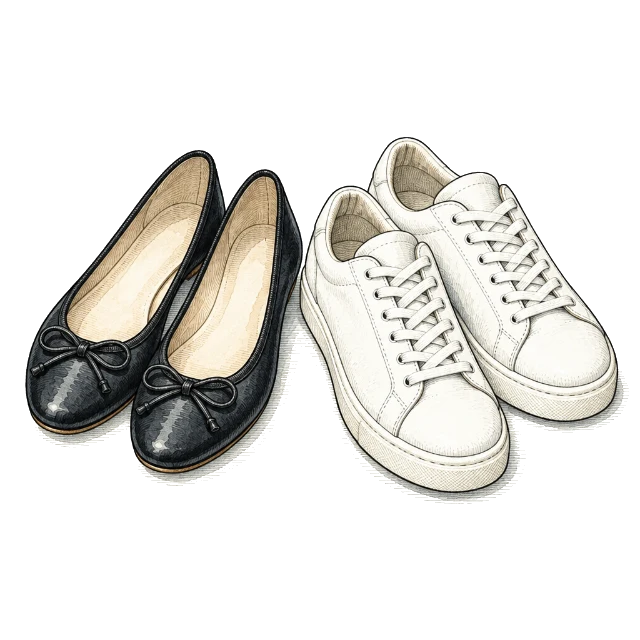
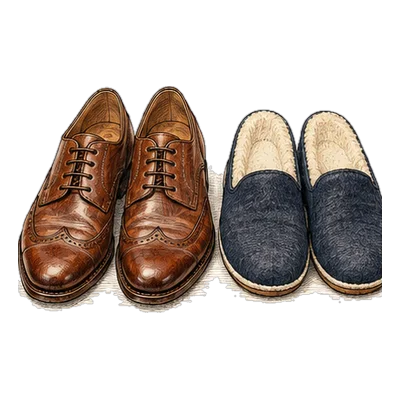
Two things change the answer. A slim leg reaches the shoe sooner and bunches faster, so it needs less length; a wide leg can take a little more and still hang cleanly. And loafers sit lower on the foot than lace-ups, so the same hem shows more sock. Hem for the shoes he actually wears.
The American way: the full break
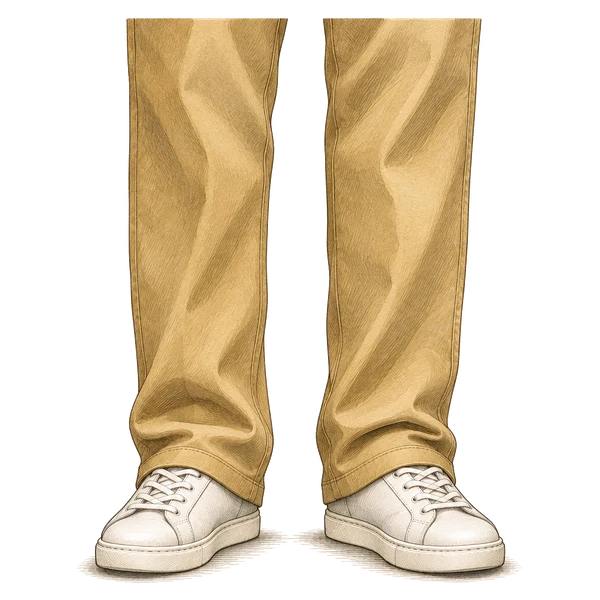
The American default is the full break, and often more: comfortable, generous, cut to sit on a sneaker. One menswear writer who has bought trousers on both sides of the Atlantic estimates that most men in the US wear their pants too long. I would not argue. It is the reader’s husband. It is, I suspect, many readers’ husbands. In fairness, it is honest: nobody with a full break is trying to impress anyone. That is also the problem.
The Italian way: show the ankle
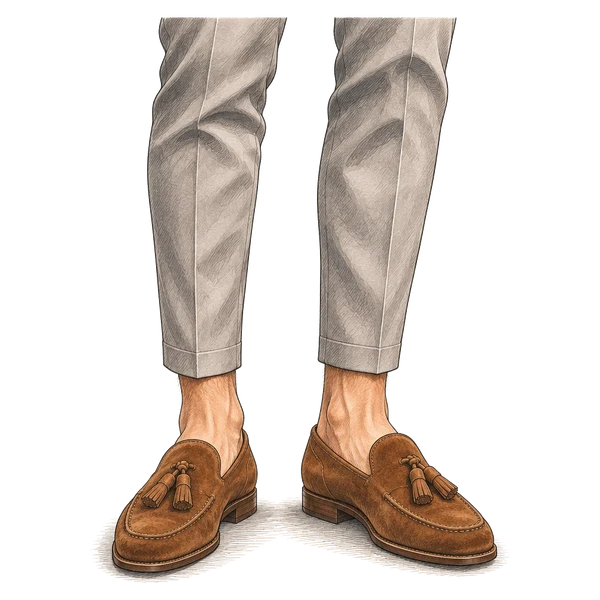
The Italians went the other way. Slim, short, the hem stopping at or above the ankle, loafers, often no socks. It is a look, and it is deliberate, which is what makes it work. The same writer says Italian tailors sometimes cut his trousers shorter than he wanted. That is the risk. On the right man in July it is very good. On a husband in a Massachusetts February, it is a cold ankle with an opinion.
The British way: the half break, with turn-ups
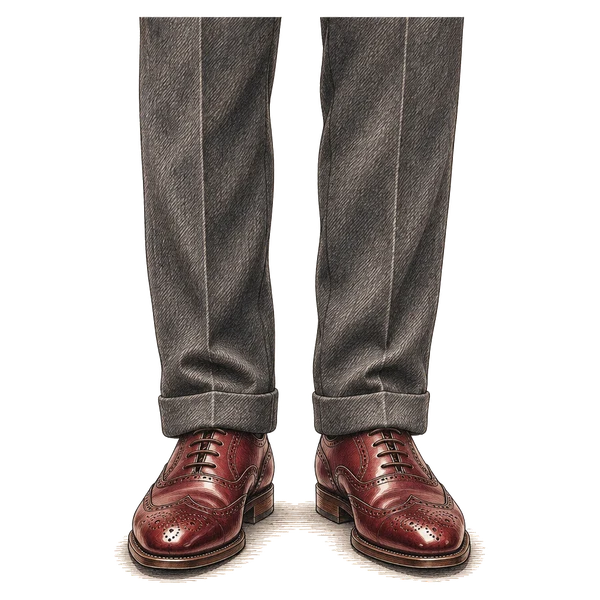
The British middle way is the half break: one soft dent at the front, and on proper wool trousers, often a turn-up, which is what the English call a cuff. A turn-up adds weight at the hem so the trouser hangs straight, and it wants a little less break, not more. It is the most forgiving of the four. If the reader’s husband will only accept one change, this is the one he will not notice he made.
The French way: it touches the shoe, once
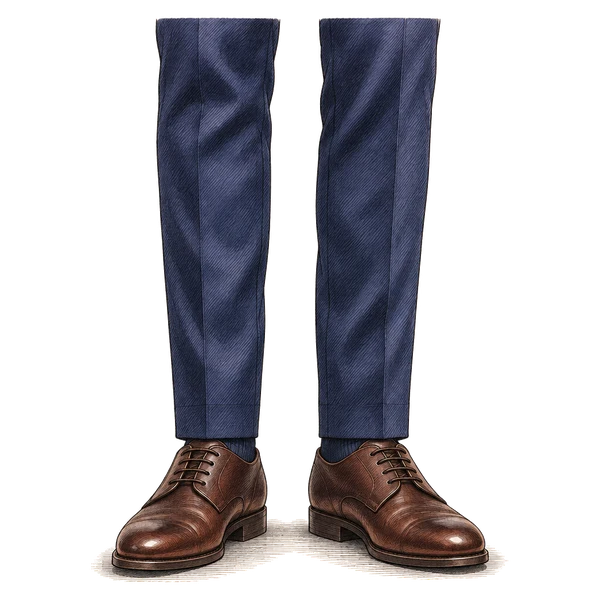
My father taught me this at seven, the way you teach a child to wash his hands, and I have never found a reason to unlearn it. The trouser touches the shoe once, at the front, and stops. No break, or the smallest one. At the back it sits just above where the heel meets the floor. When I walk, a little sock shows. When I stand, there is one straight line from the hip to the shoe. That is all. Nothing pools, because nothing is left over.
It is not about looking taller, though it helps. It is the same reason we match the belt to the shoes: the people who have to look at you deserve a clean line. Fabric gathering at the ankle says the trousers were bought for someone else.
How to fix his (and get him to agree)
Do not argue about it in the kitchen. Do it in front of a mirror, in this order.
Pick the shoes first. The pair he wears most with those trousers. Lace-ups and loafers want different hems.
Stand straight, shoes on. No looking down, which pulls the trousers up and lies.
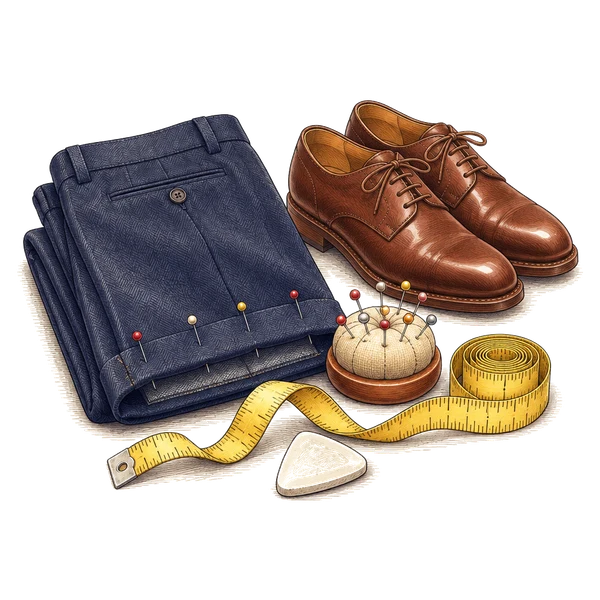
Pin the front so the hem just touches the top of the shoe. Check the back: a little above where the heel meets the floor.
Take two pairs to a tailor, the two he wears most. A hem is one of the quickest jobs a tailor does.
Let him look in the mirror afterwards. He will say it was his idea. Let him.
For jeans the rule bends a little: denim is heavier and is allowed one small break, or one neat roll. What it is not allowed to do is stack.
This or that
Is Your Closet French or American?
He has looked in my closet and he has notes. Your turn.
Take the quizThe verdict
To the reader: you are right, and he knows it. The correct length is the hem touching the shoe once and stopping. If he wants it American, a half break is the compromise every tailor will recommend. If he wants it Italian, he should own it in July. If he wants it French, he will never think about it again, which is, after all, the point of getting dressed.
And to her husband: I say this with affection. Your ankles are allowed out.
Questions, answered
How long should men’s pants be?
For most trousers the front of the hem should just touch the top of the shoe, with no fold or one small one, and the back should sit a little above where the heel meets the floor. If the fabric folds at the front and the back, it is too long.
What is a “break” in pants?
The break is the fold the fabric makes where the trouser meets the shoe. No break: the hem just touches the shoe. Half break: one soft dent at the front. Full break: a deeper fold, with the back of the hem reaching about halfway down the heel of the shoe.
Should pants be shorter with loafers?
Usually, yes. Loafers sit lower on the foot than lace-ups, so the same hem shows more sock or ankle. Hem for the shoes he wears most, and with loafers a no break or a bare ankle looks deliberate.
Do slim pants need a shorter hem?
Yes. A slim or tapered leg reaches the shoe sooner and bunches faster, so it needs less length. A wide leg can take a little more length and still hang cleanly.
Sources on the break and how trousers are cut: Gentleman’s Gazette, Proper Cloth, MasterClass. The country styles are the broad habits, not laws; every country has a man in the wrong trousers.
Have a question for him? Ask my French husband. For more of his verdicts, we’re on Instagram, and Le Bulletin gets field notes like this one.