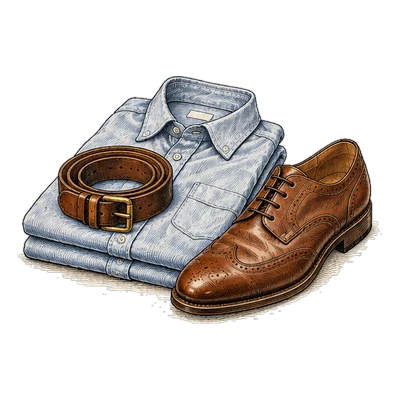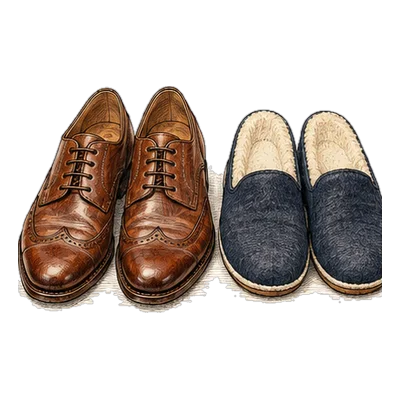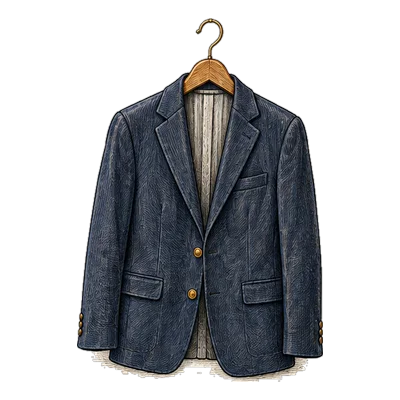
My wife informs me the comments have questions about my clothes. Why the belt matches the shoes. Whether this is deliberate. Whether I am aware there are other options. I am aware. The answers do not belong to me; they belong to my father, and since he is not on Instagram, I will answer for him. He would want the record correct.
Your vote
The belt matches the shoes?
One tap. No email needed.
He was always dressed
I do not mean he dressed well, although he did. I mean there was no hour of my childhood in which my father was not dressed. He worked in fashion, which people assume explains it. It does not. Fashion was his profession; being dressed was his condition. On Sunday mornings. In August. During a move, once, carrying boxes down four flights - the shirt stayed tucked. I found this ordinary for years, the way children find everything ordinary. Then I met the world, with its special outfits for every surrender, and understood I had been raised inside an argument.
The rules, as they were given to me
They were not presented as fashion. They were presented the way one presents handwashing. The belt agrees with the shoes - brown with brown, black with black, and if they cannot agree, one of them is wrong and it is usually the belt. Trousers end where they are told, which is higher than this country believes. You buy one good thing instead of five; he considered this mathematics, not philosophy, and my whole wardrobe still runs on that equation. And the collar: I was seven, in front of the mirror, and he adjusted mine and said that clothes speak to each other - my job was only to make sure they agreed. I have been supervising that conversation for forty years. It has never once ended in shouting.
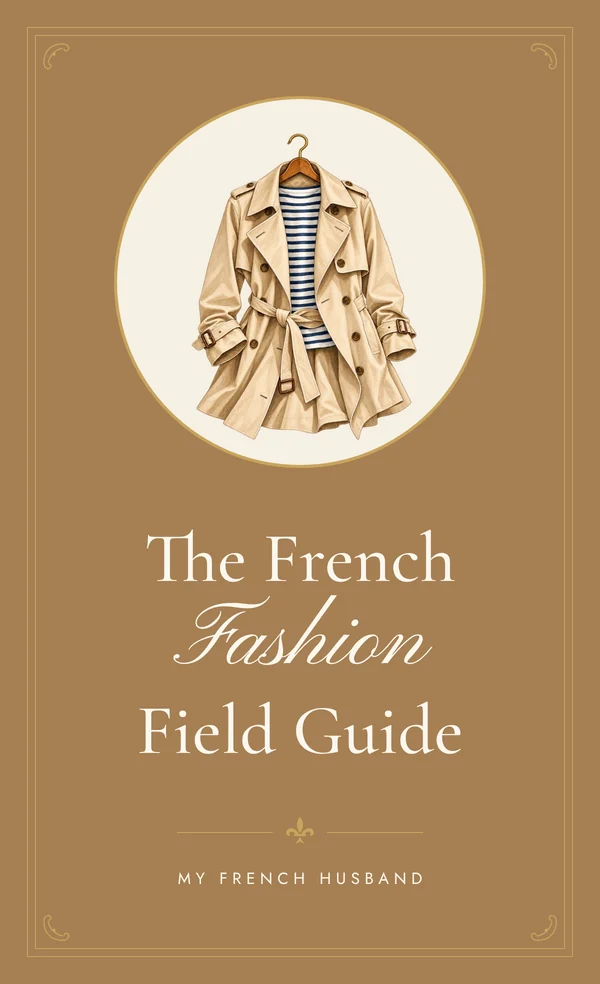
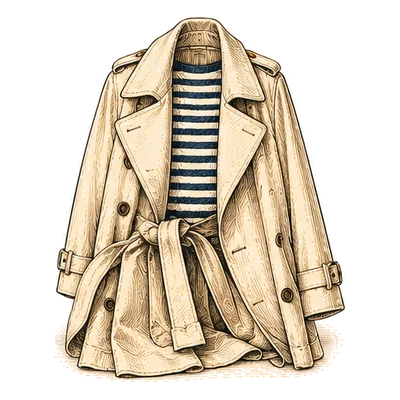
My wife has since written them down, with seventeen more for women, in The French Fashion Field Guide. I approved every word. Slowly. - S.
What New York added
He fell for America before I did - New York, when I was five - and he came back carrying its boldness the way other men carry souvenirs. From my mother's family I received the older lessons, the table, the forks, the standing when someone enters. From my father I received permission: a man can belong to two countries, he showed me, provided his shoes are correct in both. People ask why a Frenchman like me genuinely likes it here. This is why. I inherited the affection the way I inherited the belt rule - young, completely, and without being asked.
This or that
Is Your Closet French or American?
Leggings or a full outfit to buy bread? Forty tops or eight good things? Six this-or-that questions.
Take the quizThe verdict
I mow an American lawn in loafers. The internet has opinions; my wife films them arriving. But I fold my sons' shirts at night - Owen supervises; he has views on collars already, which I am told is genetic - and I understand my father finally. He was never dressed for the day. The day did not merit it, most days. He was dressed for us - so that whatever the morning held, his family would look over and see a man who had decided things were under control. The lawn does not get a vote. It never did. America and I have our disagreements, but on this we are aligned: my sons will look over one day, mid-chaos, and see the same thing I saw. The shirt will be tucked. - S.
Questions, answered
Does the belt really have to match the shoes?
Yes. Brown with brown, black with black, and the finishes should not argue. It is the first rule because it is the easiest: two items, one agreement. A man who cannot manage that negotiation should not attempt patterns.
How do you teach children to dress well?
The way my father did: early, briefly, and as respect rather than style. One rule at a time, demonstrated rather than explained. The mirror does most of the teaching. The rest is repetition and the occasional look.
What did your father do in fashion?
He worked in the industry and moved to New York for it when I was five - but the profession is the least of it. The lessons would have been identical had he sold insurance. Being dressed was never his job. It was his answer.
Still wondering?
Ask my French husband.
A short ruling in a few seconds. Written by AI from our Journal, in his voice.
For his verdicts delivered with unreasonable seriousness, we're on Instagram — and Le Bulletin gets field notes like this one.
Before you go
How French Is Your Husband?
Mine is very French. Eight questions to find out about yours.