Your vote
A radish as a first course?
One tap. No email needed.
First, the word “appetizer” is doing too much work
In America everything before the main course is an appetizer, whether you are standing in a kitchen holding a drink or sitting at a table with a fork. France splits this in two, and the split matters. The apéritif is the drink before dinner, with something small and salty to hold. The entrée is a proper first course, plated, eaten sitting down, with cutlery. Eight of the ten below are entrées. When an American asks me for French appetizers, they usually picture the first thing and I picture the second, and we are both slightly disappointed. If you want the drinks-table version specifically, my wife has written that one up.
Appetizers in French: the words to know
There is no single word, because French divides the moment before the main course into several. These are the ones you will hear:
- Entrée: the first course, plated and eaten at the table. Careful: in France the entrée is the starter, not the main course. The main course is the plat or plat principal.
- Hors-d’œuvre: literally “outside the work”, meaning outside the main meal. The older, more formal word for a cold first course or a selection of small dishes. In English it is usually spelled hors d’oeuvres, and searched as everything from “orderves” to “au devours”.
- Amuse-bouche: a single bite sent out by the kitchen before the meal, in restaurants. Nobody orders it.
- Amuse-gueule: the at-home version: olives, crisps, nuts, a few slices of saucisson with drinks.
- Apéritif, or apéro: the drink before dinner, and by extension the whole moment, with the amuse-gueules on the side.
| On a French menu | Say it | What it means |
|---|---|---|
| Entrées | ahn-TRAY | The first courses. Not the mains. |
| Hors-d’œuvre | or-DUH-vruh | A selection of small cold dishes, often on one plate |
| Amuse-bouche | ah-mooz-BOOSH | One bite from the kitchen, free, before the meal |
| Amuse-gueule | ah-mooz-GUHL | Nibbles with drinks: olives, nuts, saucisson |
| Apéritif, apéro | ah-pay-ree-TEEF, ah-pay-ROH | The drink before dinner, and the moment itself |
| Plats | PLAH | The main courses |
Where appetizers come in a French meal
In a fixed order, and the order is official. When UNESCO added the gastronomic meal of the French to its list of the world’s intangible cultural heritage in 2010, it described a set structure: an apéritif to begin, liqueurs to end, and at least four courses in between, a starter, fish or meat with vegetables, cheese and dessert. Nobody eats all of that on a Tuesday, but the shape of a weeknight dinner is the same, just shorter.
- Apéritif: a drink and a few amuse-gueules, before sitting down.
- Entrée: the starter, at the table. This is where eight of the ten dishes below belong.
- Plat: the main course.
- Fromage: cheese, before dessert, not after. More on that in the French cheese course.
- Dessert, then coffee.
On a restaurant menu you will usually meet it as a formule: a set price for entrée + plat or plat + dessert, sometimes all three. If you only want one starter, order it as an entrée, not an appetizer; the waiter will understand both, but only one sounds like you have done this before.
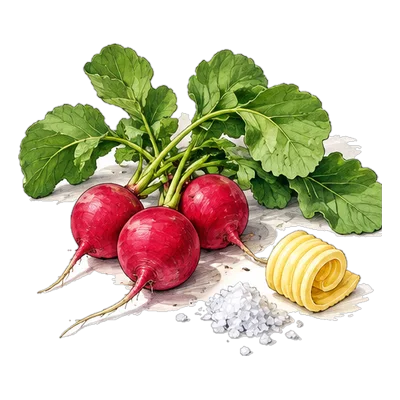
1. Radis beurre — radishes with butter and salt
Raw radishes, cold unsalted butter, flaky salt. You hold the radish by its stem, drag it through the butter and dip it in the salt. That is the entire method and there is nothing else to it. In France this appears in spring, on tables, at apéro, without ceremony. What surprises Americans is the butter — the assumption seems to be that a vegetable should arrive with a dip rather than with a cold slab of fat, and that adding butter to a raw vegetable is either genius or a prank. It is neither. It is arithmetic: the radish is peppery, the butter is not. The full method is here, though calling it a method is generous.
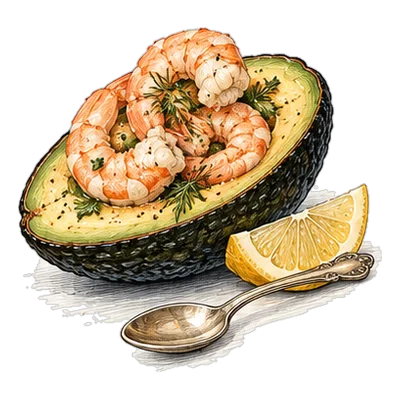
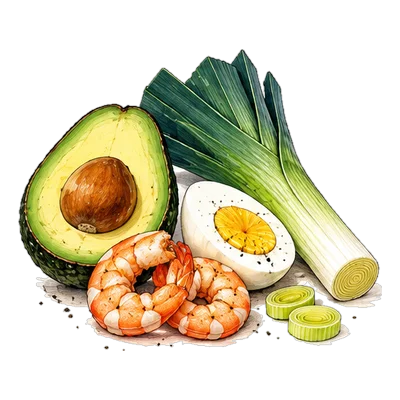
2. Avocat crevettes — avocado with shrimp
Half an avocado, the stone removed, the hollow filled with small cooked shrimp and a spoon of sauce cocktail. Served cold, in the shell, with a teaspoon. This is a 1970s dish and France has never let it go, which tells you something about France. It is a standard summer entrée and it is on the menu of every provincial restaurant that has not been renovated. The American surprise is usually the pink sauce, which reads as dated — to which I say: yes. That is the point. Nobody is claiming this is modern. It is comforting in the way a wallpaper you grew up with is comforting.
3. Œufs mayonnaise — eggs with mayonnaise
Hard-boiled eggs, halved, covered in mayonnaise. That is the dish. There is a French association that exists specifically to defend its quality in restaurants, which is not a joke and which I support entirely. Served cold as an entrée, in bistros and at home, usually two halves per person on a small plate. Americans find it startling that this is a menu item rather than a thing you make standing at the fridge. But the mayonnaise is the dish — real mayonnaise, made properly, generous. Order this in a bistro and you learn more about the kitchen in one bite than from anything else on the card.
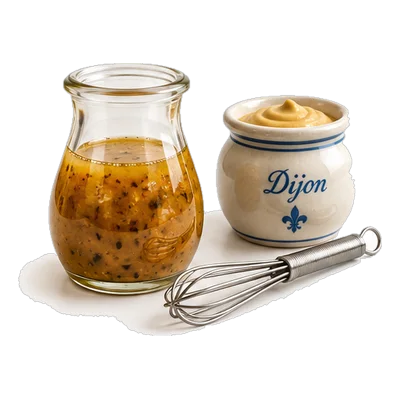
4. Poireaux vinaigrette — leeks with vinaigrette
Leeks, poached until soft, drained, cooled, and dressed with a sharp mustard vinaigrette (our recipe French vinaigrette is the one to use). Sometimes chopped egg or shallot on top. Served cold or barely warm, as an entrée, and it is one of the most common starters in France. Americans, in my experience, do not eat leeks. They know leeks as something inside a soup, not something served as itself, lying on a plate, dressed. The surprise is the texture — silky rather than crunchy — and the vinaigrette, which is much sharper than an American dressing because it is not carrying any sugar.
5. Carottes râpées — grated carrot salad
Carrots, grated raw, dressed with lemon or vinegar, oil, salt, sometimes parsley. Eaten constantly. Every school canteen, every supermarket chilled aisle, every family kitchen. It is the most ordinary food in France and I would eat it four times a week without noticing. Americans are surprised twice: first that raw grated carrot is a dish rather than a garnish, and second that it has no raisins in it and is not creamy. The dressing is sharp and thin. It is not carrot salad in the American sense at all, which may be why nobody here believes me when I describe it.
6. Pâté de campagne — country-style pâté
Coarse pork pâté, cooked in a terrine, sliced thick, eaten cold with bread, cornichons and mustard. Rustic rather than refined — you can see what is in it. Bought from a butcher or a supermarket, not usually made at home, and eaten as an entrée or at apéro. The American hesitation is the word pâté and its association with liver, luxury and something spreadable in a tiny pot. Pâté de campagne is none of that. It is a thick slice of seasoned pork, closer to a coarse terrine than to a mousse, and the cornichon is not a garnish — it is the acid that makes the fat work.
The official test
Could You Survive a French Dinner Party?
When to arrive, what to bring, where to put your hands. Eight questions. I failed all of them in real life.
Take the quiz7. Rillettes — slow-cooked shredded pork
Pork cooked very slowly in its own fat until it falls apart, then shredded and packed into a pot with the fat on top. You spread it thickly on bread. It is not smooth; you should see the strands. Sold everywhere, made at home rarely, eaten at apéro or as an entrée. What surprises Americans is the fat, which is visible, which is deliberate, and which nobody in France apologises for. Rillettes from Le Mans or Tours are the ones people argue about. Spread it thick. Spreading rillettes thinly is a small tragedy and I have watched it happen at my own table.
8. Melon au jambon — melon with cured ham
Half a Charentais melon, or wedges of it, draped with thin slices of cured ham. Served cold in summer, as an entrée, at home more often than in restaurants. There is no dressing, no basil, no balsamic reduction. Americans know this combination as prosciutto e melone and are usually surprised only by how plain the French version is — no arugula, no drizzle, nothing under it and nothing on it. The melon has to be good, which is the entire risk of the dish. A bad melon cannot be rescued by ham, though people try.
9. Escargots de Bourgogne — snails in garlic butter
Snails, baked in their shells under a large quantity of garlic-parsley butter, served in a dimpled dish with small tongs and a narrow fork. Almost entirely a restaurant dish, and a special-occasion one — no French family is making these on a Tuesday. The American reaction is predictable and I have stopped defending it. But the honest description is this: the snail is a texture, mild and slightly chewy, and the dish is really about the butter and the bread you use to finish it. Nobody in France orders escargots for the snail. We order them for the butter and we are not ashamed of it.
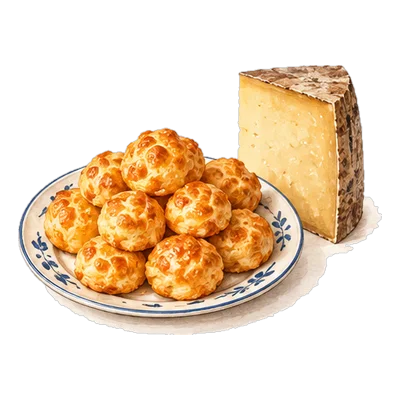
10. Gougères — warm cheese puffs
Choux pastry with grated cheese — usually Comté or Gruyère — baked into small puffs and eaten warm. This is apéro food, not an entrée: served standing up, with a glass of something, ideally still hot from the oven. Burgundy claims them. They are also the one item on this list that Americans have no objection to whatsoever, because they are cheese and pastry and warm. If you are cooking for French people and you are nervous, make gougères. Nobody has ever been unhappy to be handed one, and I include myself in that in every year of my life.
Which French appetizer should you try first?
Start with gougères if you are cooking, or radis beurre if you are not — both are three ingredients, both are impossible to dislike, and neither requires you to be brave. Once that goes well, move to œufs mayonnaise or carottes râpées, which are the true everyday food and the better test of whether you actually like French eating or just like the idea of it. Save escargots and pâté de campagne for last. Not because they are difficult, but because they are the two where the American imagination has already decided something, and it is easier to change your mind on a full stomach.
Apéro or entrée?
| Dish | Where it belongs | Home or restaurant |
|---|---|---|
| Radis beurre | Apéro or entrée | Home |
| Avocat crevettes | Entrée | Both |
| Œufs mayonnaise | Entrée | Both |
| Poireaux vinaigrette | Entrée | Both |
| Carottes râpées | Entrée | Home |
| Pâté de campagne | Entrée or apéro | Both |
| Rillettes | Apéro or entrée | Home |
| Melon au jambon | Entrée | Home |
| Escargots de Bourgogne | Entrée | Restaurant |
| Gougères | Apéro | Both |
Questions, answered
What is a typical French appetizer?
Most classic French appetizers are entrées — small plated first courses eaten at the table. Common ones include œufs mayonnaise, poireaux vinaigrette, carottes râpées, avocat crevettes and pâté de campagne. They tend to have three or four ingredients and are served cold.
What is the difference between an apéritif and an entrée in France?
The apéritif is the drink before dinner, served with something small and savoury, usually standing up. The entrée is the first course of the meal itself, plated and eaten at the table with cutlery. English calls both “appetizers”; French does not.
What appetizers do French people eat at home?
Everyday ones: grated carrot salad, eggs with mayonnaise, leeks in vinaigrette, melon with cured ham, radishes with butter, and pâté or rillettes bought from a butcher. Escargots are largely a restaurant dish.
What are the easiest French appetizers to make?
Radis beurre needs three ingredients and no cooking. Carottes râpées needs a grater. Melon au jambon needs a good melon and nothing else. Gougères require baking but are the most reliably popular.
How do you say “appetizers” in French?
Les entrées, for plated first courses, which is the word on a French menu. A spread of small dishes is les hors-d’œuvre, and the nibbles served with drinks before dinner are les amuse-gueules.
What is the French word for appetizer?
It depends on the moment. A plated first course is an entrée, a more formal selection of small dishes is an hors-d’œuvre, a free bite from a restaurant kitchen is an amuse-bouche, and the nibbles with a drink before dinner are amuse-gueules, served at the apéro.
How do you spell hors d’oeuvres?
Hors d’oeuvres in English, hors-d’œuvre in French. It means “outside the work”, that is, outside the main meal, and it is pronounced roughly “or-DERV”.
Still wondering?
Ask my French husband.
A short ruling in a few seconds. Written by AI from our Journal, in his voice.
He judges America weekly on Instagram, and Le Bulletin collects the best of it.
Before you go
Your First Dinner with French In-Laws
I have sat through this dinner. See how you would do.