The first American dinner party we hosted together, I put out a beautiful cheese board at 6 PM with drinks, as one does. My husband looked at it the way you'd look at a wedding cake served at breakfast. "But," he said quietly, "now the cheese has happened."
Your vote
Cheese, when?
One tap. No email needed.
When do the French actually eat cheese?
After the main course, before dessert. That's the slot - le plateau de fromage arrives when the plates are cleared, with bread (never crackers, a position he holds with constitutional firmness), and it functions as the savory landing before anything sweet. The logic, once you live it, is honestly sound: cheese ends the salt-and-fat arc of the meal; dessert opens the sugar one. America serves the richest food of the evening as a warm-up; France serves it as a conclusion. "You do not begin a story with the ending," he says, holding a wedge of Comte like a closing argument.
What goes on a French cheese course at home?
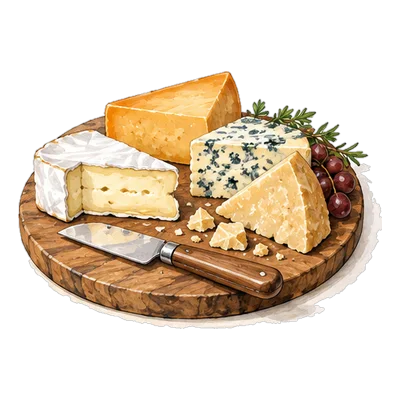
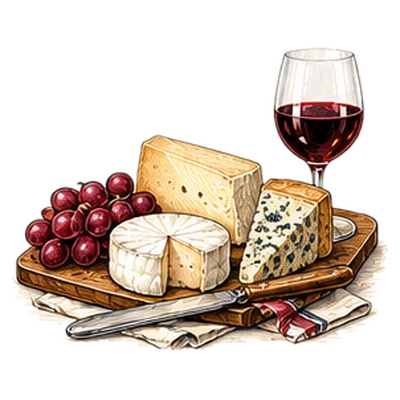
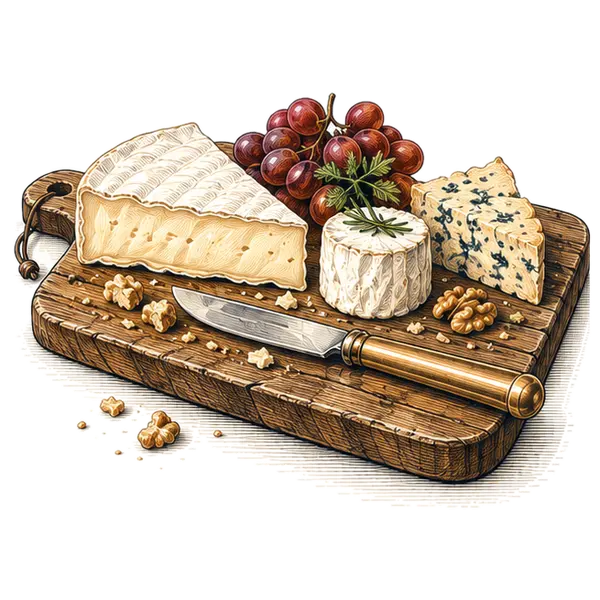
Far less than Instagram suggests. A weeknight plateau is two or three cheeses, full stop - typically one soft (a Camembert or Brie doing its slow collapse), one hard (Comte, the house currency), and one wildcard: a blue, a goat, whatever the market suggested. Room temperature, always - cold cheese "has not woken up." Bread, maybe a few walnuts. The elaborate twelve-cheese boards are for holidays; the everyday version is modest and constant, which is the entire French trick with everything.
Can you do a cheese course with American supermarket cheese?
More easily every year - the imported section of a regular American supermarket now carries real Brie, actual Comte or Gruyere, and respectable goat cheese, and his inspections there end in approval often enough to be commercially uninteresting for this account. House rules for the American build: take it out of the fridge an hour before dinner, skip anything pre-shredded or labeled "cheese product," and let a Babybel stand in for the boys - the consolation cheese of the show remains in honorable service. The broader shopping map is in the grocery field report.
How do you cut cheese the French way?
So that everyone gets the same share of the middle and the rind. That one idea explains every rule.
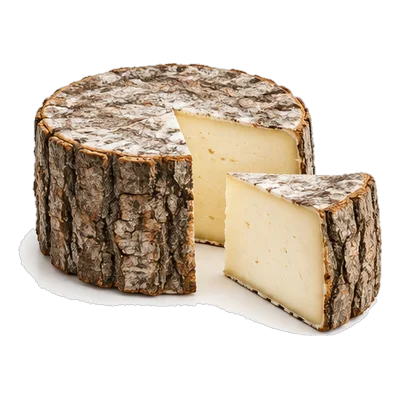
A round cheese, such as Camembert, is cut like a cake, in wedges from the centre.
A wedge of Brie is cut along its length, in thin slices from the point to the rind. Cutting straight across the tip takes the best part for yourself, and it is the mistake French hosts notice most.
A log of goat cheese is cut into rounds.
A block of hard cheese, such as Comté, is sliced across, so each piece has a little rind at one end.
A blue cheese is cut in a fan from the centre of the thin edge, so nobody is left with only the outside.
What order do you eat the cheeses in?
From the mildest to the strongest. A fresh goat cheese first, then the soft cheeses, then the hard ones, and the blue last. A blue eaten first flattens everything that comes after it.
Take a small piece of two or three, not a sample of everything. Traditionally the board goes round the table once, so you take what you want the first time.
The official test
Could You Survive a French Dinner Party?
When to arrive, what to bring, where to put your hands. Eight questions. I failed all of them in real life.
Take the quizDo you eat the rind?
Usually, yes. The white, bloomy rind of a Brie or a Camembert is meant to be eaten, and so is the wrinkled rind of a goat cheese. The orange, washed rinds are edible and strong, and many people leave them.
The hard rind of a Comté or a Parmesan, and anything waxed or wrapped in cloth, is left on the plate. Beyond that it is personal, and no French host will comment on what you leave.
What do you serve with it?
Bread, and very little else. A baguette or a country loaf, sliced. A green salad with a sharp vinaigrette is common, served at the same time or just before.
What you will not see is the American board: no crackers, no grapes arranged for a photograph, no honey, no cured meat. Those belong to the apéritif, if anywhere. To drink, people simply finish the wine from dinner. In the third week of November, that might be the new Beaujolais Nouveau.
The verdict
The cheese course isn't fancy; it's punctuation. Three cheeses, some bread, ten minutes of the dinner slowing down before it turns sweet. We run it a few nights a week in Massachusetts, and I'll admit what I fought for years: the man is right about this one. The cheese board at 6 PM was dessert wearing a disguise. Now the cheese happens at the end - and it happens every time.
Questions, answered
Why do French people eat cheese after the main course?
Because the meal is sequenced savory-to-sweet: the cheese course closes the savory arc before dessert opens the sweet one. Cheese is treated as a course with its own slot, not an appetizer.
What cheeses go on a simple French cheese board?
At home, two or three: one soft (Brie or Camembert), one hard (Comte or Gruyere), and one blue or goat cheese, served at room temperature with bread. Large boards are for special occasions.
Do the French eat cheese every day?
Very commonly, yes - a small cheese course after lunch or dinner is routine in many households, but in modest portions. It's frequency and moderation, not abundance.
How do you cut Brie correctly?
Cut a wedge of Brie along its length, in thin slices from the point to the rind, so every slice has some of the centre and some of the rind. Do not cut straight across the tip.
Do you eat the rind on French cheese?
Usually. The white rind on Brie and Camembert and the rind on goat cheese are meant to be eaten. Hard, waxed or cloth rinds are left on the plate.
What order should you eat cheese in?
From mildest to strongest: fresh goat cheese first, then soft cheeses, then hard cheeses, and blue cheese last.
What do the French serve with cheese?
Bread, and often a green salad with vinaigrette. Crackers, fruit, honey and cured meats are not part of a traditional French cheese course.
Still wondering?
Ask my French husband.
A short ruling in a few seconds. Written by AI from our Journal, in his voice.
For his verdicts delivered with unreasonable seriousness, we're on Instagram — and Le Bulletin gets field notes like this one.
Before you go
Your First Dinner with French In-Laws
I have sat through this dinner. See how you would do.