Of all the griefs my husband carries through American supermarkets, butter is the quietest and the deepest. He doesn't perform this one for the camera. He just stands at the dairy case, reads a label that says "79% vegetable oil spread," and ages slightly.
Your vote
Salted butter?
One tap. No email needed.
What makes French butter different?
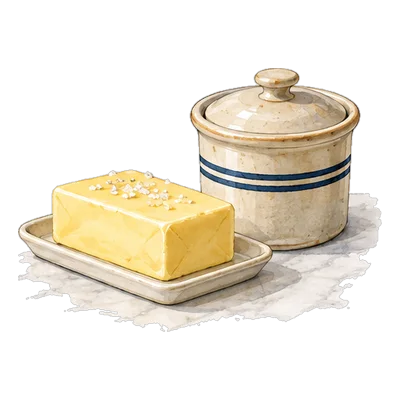
Three things, none of them romantic. First, the law: French butter must be at least 82% butterfat, and the famous AOP butters run higher. The American minimum is 80%, and those two points are the difference between butter that folds into a croissant and butter that weeps water into a hot pan. Second, the method: French butter is traditionally cultured - the cream ferments slightly before churning, which adds the faint, almost cheese-adjacent depth that makes people say French butter "tastes like something." American butter is mostly sweet-cream: fresher, blanker. Third, the salt: demi-sel butter carries actual sea salt, sometimes in crystals you can feel. "It is seasoning," he says, "not preservation. There is a difference, and it is the whole difference."
Can you get French-style butter in America?
Yes, and this is where his inspections turn merciful. European-style butters - higher fat, often cultured - now sit in most American supermarkets, and the imported French names have crossed the Atlantic in force. The house ranking, extracted under mild protest: imported French demi-sel for bread, a good European-style for baking, and for the everyday - "the American butter that says 84% is trying, and I respect trying." What fails: anything in a tub with a name that is an adjective. If the package promises it's buttery, he notes, the package is confessing.
Does the butter difference actually matter?
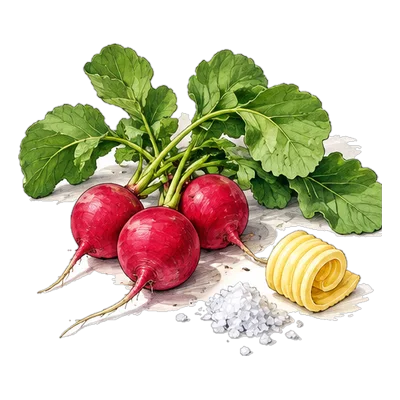
For toast and radishes - the French eat butter on things as a food, not just in them - absolutely. For baking, the higher fat changes lamination, which is why croissant recipes beg for it. For a Tuesday grilled cheese for three boys? He has been observed using the ordinary sticks without comment, which in this house constitutes a signed treaty. The full context of what survives his American dairy inspections lives in the grocery store field report. And for the purest test of a butter, try radishes with butter, the French snack.
The official test
Could You Survive a French Dinner Party?
When to arrive, what to bring, where to put your hands. Eight questions. I failed all of them in real life.
Take the quizThe verdict
Butter is the rare French superiority claim with paperwork behind it: more fat by law, more flavor by method, salt as seasoning. The bread it goes on has paperwork too: the French bread law. Buy the 82% and above, try one demi-sel on good bread with radishes, and you will understand him a little better. That's all he's ever wanted. That, and for the tubs to stop.
Questions, answered
Why is French butter better than American butter?
Mainly regulation and method: French butter must be at least 82% butterfat versus the 80% US minimum, and it's traditionally cultured - lightly fermented before churning - which adds depth. More fat and more flavor compounds, less water.
What is cultured butter?
Butter made from cream that's been fermented with live cultures before churning, giving a subtle tang and deeper flavor. Most French butter is cultured; most standard American butter is sweet-cream.
What American butter is closest to French butter?
European-style butters sold in US supermarkets - typically 82-84% butterfat and often cultured - are the closest match, and several French brands are now widely imported. For bread, look for demi-sel (sea-salted).
Still wondering?
Ask my French husband.
A short ruling in a few seconds. Written by AI from our Journal, in his voice.
For his verdicts delivered with unreasonable seriousness, we're on Instagram — and Le Bulletin gets field notes like this one.
Before you go
How Parisian Are You?
He has been grading me for years. It is your turn.