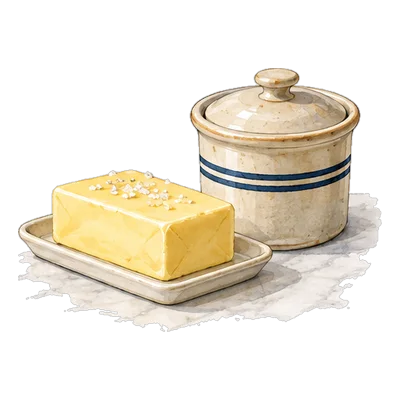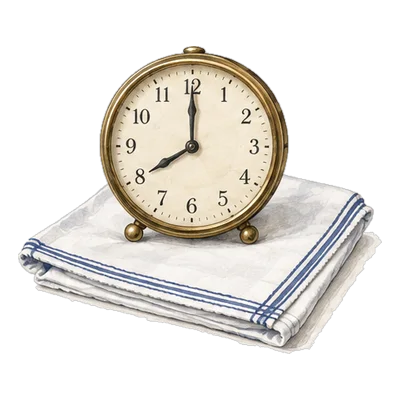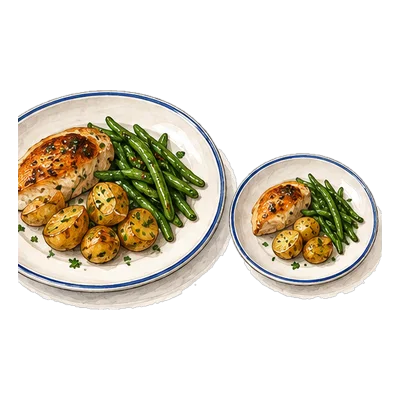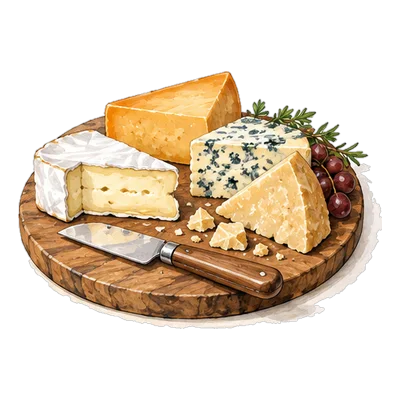
It's the question in our comments every single week, from both countries: how do the French eat baguette, cheese, butter, and dessert and stay thin? My husband has heard the theories - the red wine, the cigarettes, the genes - and dismisses them with the weariness of a man asked about a conspiracy. "It is not a paradox," he says. "It is a timetable."
Your vote
Three meals and nothing else?
One tap. No email needed.
What is the French paradox?
The term comes from 1980s research noting France's low heart-disease rates despite a rich diet. Decades of follow-up landed somewhere less romantic than the wine explanation: the French eating pattern - structured meals, moderate portions, minimal snacking - does most of the work. The food is rich; the system around it is strict.
What do the French actually do differently?
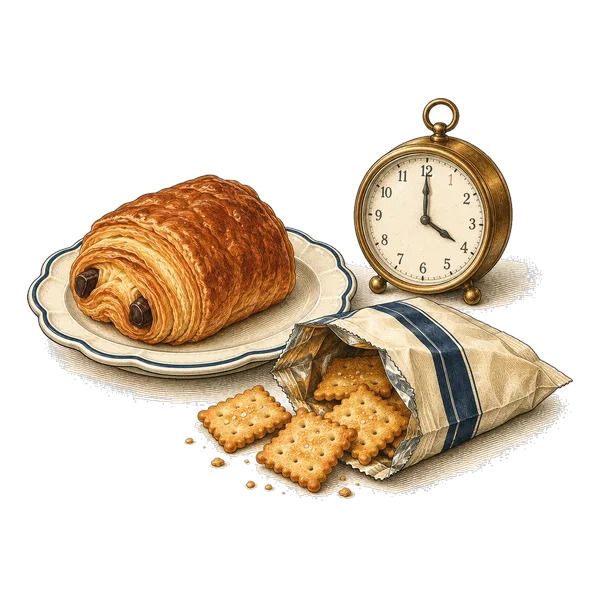
Four unglamorous things. They eat at fixed times and almost never between them - the national anti-grazing rule that starts in childhood with the gouter. They eat smaller portions of full-fat, satisfying food, slowly, sitting down - a meal is an event with a beginning and an end, not a rolling state. They drink water with meals. And they walk - to the bakery, the market, the school - because French towns are built for feet. None of this is a diet. All of it is infrastructure.
What does he think of the American approach?
His observation, delivered gently for once: "America eats all day and then diets. France eats magnificently and then stops." The American pattern - grazing, large portions, sweet drinks, then compensating with restriction - treats eating as a problem to manage. The French pattern treats it as a pleasure with office hours. (For the full portrait of the gap, see why the French eat dinner at 8.)

The official test
How Parisian Are You?
Home, food and beauty. Eight questions, one minute, one verdict you may not like.
Take the quizThe verdict
The exportable part isn't a food - it's the clock. Set meal times, real plates, water, a walk, and the radical act of not eating between meals. Our household runs it imperfectly, with American exceptions on birthdays and Sundays. It works better than any diet either country sells. He would like that sentence framed.
Questions, answered
Why are French people thin despite eating bread and cheese?
Because of eating structure, not restriction: fixed meal times, small portions eaten slowly, water instead of sugary drinks, minimal snacking, and daily walking. Rich food inside a strict routine beats light food inside a chaotic one.
Is the French paradox real?
The observation is real - France historically shows lower obesity and heart-disease rates despite a rich diet - but researchers attribute it mainly to meal patterns, portion sizes, and lifestyle rather than to wine or genetics.
Do French people ever snack?
Rarely, by design. The main exception is the gouter, the scheduled 4 PM snack for children. Adult grazing exists but remains culturally discouraged - eating between meals is quietly judged.
Still wondering?
Ask my French husband.
A short ruling in a few seconds. Written by AI from our Journal, in his voice.
For his verdicts delivered with unreasonable seriousness, we're on Instagram — and Le Bulletin gets field notes like this one.
Before you go
Could You Survive a French Dinner Party?
I failed my first French dinner party. See if you would do better.