What is a belle-mère?
Your mother-in-law. Belle-mère literally means “beautiful mother”, and the same word is used for a stepmother. Your father-in-law is your beau-père, and the whole family is la belle-famille. You will hear the word a lot, sometimes with a smile.
What was meeting his parents like?
His father terrified me. He did not talk much, and I read the silence as a verdict. It was not; reserved is not the same as unimpressed. His mother was sweet. She brought me a gift, a keychain, which I did not expect, and she was a little judgy, but nice.
His friends were their own test: la bise with every single one of them, hello and goodbye, and girlfriends I could not work out. The rest of that story is in my French boyfriend.
Should you say tu or vous?
Start with vous, and with madame and monsieur unless you are told their first names. In many families the parents will suggest tu quickly, sometimes at the first meal. Let them be the ones to switch. If your partner says “on se tutoie”, you can relax. Even small talk follows the rule: vous êtes de quel signe ?
Choose your own adventure
Your First Dinner with French In-Laws
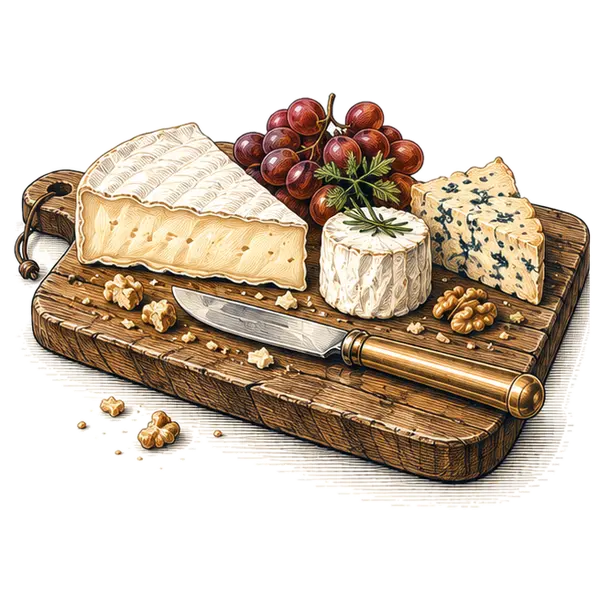
A choose-your-own-adventure. His parents, six decisions and one Brie you should not touch.
Start the adventureWhat should you bring?
Something for the host, always. Flowers, good chocolates or a bottle of wine you would be happy to drink are all safe. Never chrysanthemums: in France they are the flower of graves and of Toussaint. If you bring wine, do not expect it to be opened that day; the menu has already been planned.
A small thing from where you live works well too. Something American and good, rather than something American and funny.
The Sunday lunch
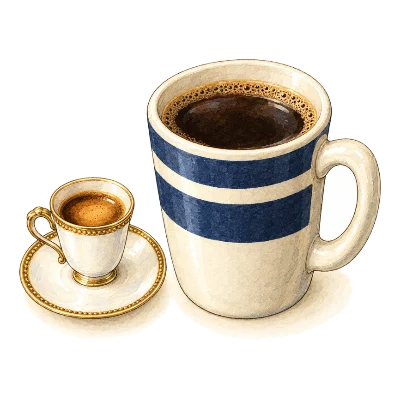
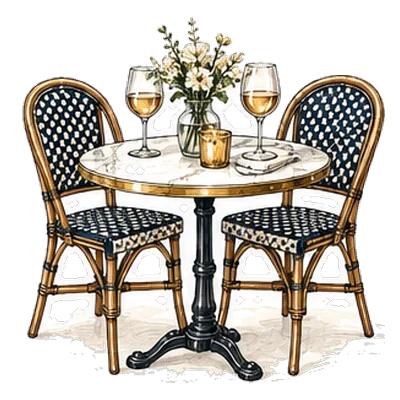
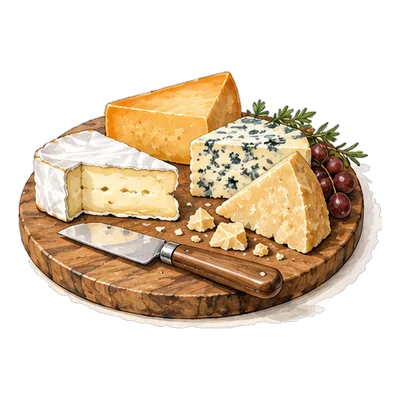
The classic first meeting is lunch, and it is long. An aperitif, a starter, a main, the cheese course, dessert and coffee, at the table, for two or three hours. Bread sits on the tablecloth, not on a plate. Wait for the host before you start, keep your hands on the table, and take a little of everything. The cheese course has its own rules, in the French cheese course, explained.
His mother’s cooking is part of the visit: her ratatouille, and cod with chorizo on top for a little smoky kick. Compliment the food specifically.
What will she notice?
The small things. Whether you greet everyone, including the aunt in the corner. Whether you offer to help clear, and accept the first “non, non, asseyez-vous”. Whether you take a second helping. How you dress: getting dressed for lunch is a form of politeness in many French families.
And whether you have an opinion. A French lunch is a conversation, and a polite guest who never disagrees is harder to read than one who does, nicely.
After the first meeting
Send a thank-you, through your partner or directly. Expect la bise next time without the hesitation. Over the years the formality goes; the attention to small things does not.
Questions, answered
What is a French mother-in-law called?
Belle-mère. The same word also means stepmother. The father-in-law is beau-père and the in-laws are la belle-famille.
Should I say tu or vous to my French in-laws?
Start with vous and let them suggest tu. Many families switch quickly, but it should come from them.
What should I bring to my French in-laws?
Flowers, good chocolates or a bottle of wine. Never chrysanthemums, which in France are the flower of graves.
Do you kiss your French mother-in-law?
Yes, la bise: a light kiss on each cheek, on arrival and on leaving. Follow her lead on how many.
How long is a French family lunch?
Two or three hours is normal for a Sunday lunch: aperitif, starter, main, cheese, dessert and coffee.
Still wondering?
Ask my French husband.
A short ruling in a few seconds. Written by AI from our Journal, in his voice.
He judges America weekly on Instagram, and Le Bulletin collects the best of it.
Before you go
How French Is Your Husband?
Or your boyfriend. Eight questions to find out how French he really is.